Category: Uncategorized

  • Debunking a Lazy Saying


    You’ve probably heard it a hundred times: “If you can, do; if you can’t, teach.

    It’s a lazy, ignorant saying that completely misses the point. Likely born from outdated workplace attitudes in the 19th and early 20th centuries, it reduces teaching to a consolation prize. The truth? Teachers shape the people who go on to do extraordinary things. They inspire, guide, challenge, and sometimes even save careers before they’ve begun.

    “Teaching isn’t a fallback; it’s a launching pad for greatness.”

    Countless actors, musicians, athletes, doctors, politicians, and innovators openly credit their teachers for helping them reach their dreams. Let’s look at some stories that prove just how wrong this cliché is.


    Drama: The Boy Who Shone in Adolescence

    Owen Cooper, the boy who recently won acclaim for his performance in Adolescence had talent — but raw talent alone couldn’t have earned him that award. His drama teacher played a pivotal role.

    “She didn’t just teach me lines; she taught me confidence, empathy, and emotional depth,” he says.

    In one rehearsal, when he struggled to convey despair convincingly, she guided him through exercises connecting the emotion to his own experiences. That mentorship didn’t just earn him a trophy — it built life skills that will stay with him forever.


    Sports: Serena Williams and the Power of Mentorship

    Great athletes often speak of coaches as mentors who go beyond teaching technique. Serena Williams credits her father, Richard Williams, and early coaches for instilling discipline, focus, and resilience.

    Her early training was gruelling. Long hours, repeated drills, and intense competition tested not only her body but her spirit. Her coaches’ encouragement helped her navigate these challenges, showing her that success in sports — and life — depends on mindset as much as skill.

    “The lessons I learned from my coaches didn’t just make me a better player — they shaped who I am.”


    Music: Lang Lang’s First Piano Teacher

    Lang Lang, the world-renowned pianist, often recounts the influence of his first piano teacher. Beyond technical skill, this teacher inspired a love for music and a lifelong passion.

    “He believed in me before I believed in myself,” Lang Lang recalls.

    In a pivotal moment, he was encouraged to perform a challenging piece at a small concert. Nervous and unsure, he succeeded — and discovered the confidence to pursue music at the highest level. Teachers like this shape not just talent but identity.


    Medicine: Dr. Atul Gawande’s Early Inspiration

    Dr. Atul Gawande, celebrated surgeon and author, credits a high school teacher with sparking his curiosity about biology and human physiology.

    “He didn’t just teach science; he taught me how to think.”

    This teacher challenged students to explore, question, and think critically. For Gawande, that guidance became the foundation for a career in surgery and public health innovation. Mentorship can plant a spark that lasts a lifetime.


    Politics: Barack Obama and the Teachers Who Shaped Him

    Even leaders rely on teachers. Former U.S. President Barack Obama often references the educators who nurtured his intellectual curiosity, writing, and critical thinking.

    From elementary school teachers encouraging him to read widely to high school mentors challenging his ideas, these educators shaped his understanding of leadership, ethics, and public service.

    “A teacher once told me, ‘The world needs your ideas. Don’t be afraid to share them.’ That stuck with me.”

    Unsung Heroes: Teachers Making a Difference Every Day

    Not all influential teachers gain fame. A colleague of mine, Mary Hill, a science teacher at the school where I started my career, guided a struggling student who later became a leading climate scientist. Her approach can be summarised as follows –

    “I don’t just teach chemistry — I teach persistence, problem-solving, and curiosity.”

    Mary’s teaching went far beyond formulae. She instilled critical thinking and resilience, demonstrating that teachers quietly build the future.

    Closer to home, one parent told me that his son’s chemistry teacher, Peter Drake at QEHS Hexham, was the first person to suggest university was even an option. ‘He never made a fuss,’ the parent said, ‘but he made my lad believe he belonged there.


    What All These Teachers Have in Common

    Across all these stories, the same qualities emerge: patience, empathy, vision, and adaptability. Great teachers see potential where others see obstacles. They nurture talent, instill confidence, and cultivate a mindset that can transform lives.

    “Teachers are the unseen architects of success.”

    From drama stages to sports courts, concert halls to hospitals, classrooms to political arenas, the influence of a dedicated teacher can be life-changing.


    The True Value of Teaching

    Teaching is an art. It requires patience, creativity, and emotional intelligence. A teacher must inspire without intimidating, challenge without discouraging, and lead without controlling. They celebrate success, navigate failure, and transform setbacks into lessons.

    Next time someone repeats that tired phrase, “If you can, do; if you can’t, teach,” remember the countless stories proving just how wrong — and damaging — that phrase is.

    Teaching is not a fallback — it is the foundation upon which dreams are built.

  • Why chess endures

    Chess has lasted more than a thousand years without losing its quiet fascination. Every move mixes logic with creativity, and even after millions of games, no two are the same.

    The enduring power of chess lies in its remarkable ability to remain both timeless and ever-evolving. For more than a millennium, this seemingly simple game of sixty-four squares has captivated thinkers, artists, strategists, and everyday players across cultures and continents. Its rules are straightforward enough for a child to learn within minutes, yet its strategic depth is so vast that even the most advanced computers and grandmasters continue to uncover new possibilities. This paradox—simplicity coexisting with infinite complexity—is one of the core reasons chess endures.

    Chess also holds power because it mirrors life. Every game presents a balance between long-term planning and immediate tactics, between bold creativity and measured restraint. Players must deal with uncertainty, make decisions under pressure, and accept that even the best-laid plans can be undone by a single oversight. This combination of logic, psychology, and emotional resilience makes chess more than a pastime; it becomes a training ground for disciplined thinking.

    Moreover, chess transcends language and background. Two people who share no common tongue can sit down at a board and communicate through moves alone. In this way, chess becomes a universal connector—quietly democratic, accessible to anyone with a set and a willingness to play. It inspires communities, from park benches and youth clubs to international tournaments watched by millions online.

    The digital age has only strengthened the game’s influence. Global platforms allow beginners to challenge experienced opponents, study classics, or explore new variants, ensuring that the game continues to adapt without losing its essence. Even as technology reshapes the world, the fundamental appeal of chess remains unchanged: a contest of minds, endlessly rich, endlessly renewing itself.

    Chess endures because it speaks to something essential in the human spirit—the desire to understand, to outthink, and to create meaning through thoughtful struggle.

  • The Glory of Autumn

    The Glory of Autumn – thoughts by a former teacher

    Autumn arrives with a quiet authority, neither abrupt like the explosive burst of spring nor oppressive like the blaze of summer. Instead, it carries with it a contemplative charm, a season of balance and transition. The days shorten, the air sharpens, and the natural world begins its elegant retreat toward winter’s rest. Yet within this retreat lies an unmatched splendour: autumn is a season that celebrates both abundance and impermanence, both richness and decline. Its glory is as much in the colours of its leaves as in the emotions it stirs within us.

    The first and perhaps most striking glory of autumn is its palette. No painter, however skilled, has ever fully captured the saturated hues of October. Trees shed their green cloaks to reveal hidden fire: crimson maples, amber oaks, golden birches, and russet chestnuts. Hillsides and parks become living canvases, alive with flame-like intensity. Walk along a tree-lined street in autumn, and you enter a corridor of brilliance, where each gust of wind scatters confetti of colour at your feet. The ground becomes a patchwork quilt of reds, yellows, and browns, and even the most ordinary footpath feels transformed into something ceremonial. This visual magnificence alone would justify autumn’s glory, but the season offers more than beauty for the eye.

    There is also the gift of the air itself. In summer, the heat can weigh heavily, thick and oppressive, while winter often cuts with severity. Autumn air, by contrast, is crisp yet kind. It sharpens the senses without punishing them. The first breath of an autumn morning can awaken the spirit more effectively than any cup of coffee: the scent of damp earth, the faint smoke from chimneys lit for the first time in months, the tang of apples and leaves beginning to decay. Breathing in autumn feels like inhaling nostalgia. It is no accident that so many poets and writers have chosen this season as the backdrop for reflection. Autumn invites contemplation in a way no other season does.

    Alongside its beauty and atmosphere, autumn carries the profound symbolism of harvest. For centuries, agricultural communities measured their year by the cycle of planting, growing, and gathering. Autumn was the time of reaping, of bringing home the fruits of labour, of celebrating abundance before the barrenness of winter. Even now, when fewer of us work the land directly, the spirit of harvest lingers. Markets overflow with pumpkins, squash, apples, pears, and root vegetables. Kitchens glow with the warmth of soups, stews, and spiced breads. To eat in autumn is to taste the earth’s generosity at its peak. Every bite reminds us that nature has rhythms, and we are fortunate to partake in them.

    Autumn’s glory is also cultural. Across the world, festivals and traditions cluster in this season, rooted in the ancient instinct to honour both the bounty of the earth and the approach of darkness. In North America, Thanksgiving embodies gratitude for harvest and survival. In Asia, the Mid-Autumn Festival celebrates the full moon, lanterns glowing in the cooling night. In Europe, Oktoberfest and harvest fairs echo older rituals of feasting before scarcity. Even Halloween, with its playful costumes and glowing pumpkins, is a modern reflection of ancient fears and fascinations with the thinning veil between life and death. These traditions remind us that autumn is not just a natural event but a human one—woven into our stories, myths, and celebrations.

    Yet to speak of autumn’s glory without mentioning its melancholy would be incomplete. Part of its power lies precisely in its reminder that beauty is fleeting. Leaves blaze brightly only to wither and fall. Days grow shorter, shadows longer. The year itself leans toward decline. This mixture of splendour and sadness gives autumn its depth. It is a season that teaches us the value of transience. The sight of a tree aflame with colour is more moving because we know it will soon stand bare. Autumn’s lesson is that impermanence heightens appreciation. We savour the warmth of an afternoon sun in October because we know November’s chill is near. We treasure gatherings with friends and family because winter’s solitude approaches. In this way, autumn deepens our gratitude. This is particularly true of the Lake District in Cumbria

    SONY DSC

    Ullswater in the Lake District in Autumn

    Autumn is also the season of rhythm and return. As a former teacher, it marks the beginning of the year, a time of sharpened pencils, new books, and renewed purpose. The lazy sprawl of summer gives way to structure, to routines that bring both challenge and comfort. There is glory in this sense of renewal—an opportunity to begin again, to commit to learning, to embrace growth even as the natural world seems to slow. Autumn reminds us that endings and beginnings are entwined.

    The natural world too shows resilience within decline. Animals gather food, birds migrate, hedgehogs and bears prepare for hibernation. Far from being a season of death, autumn is one of preparation and strategy. The world does not despair at the fading light; it adapts. There is glory in this resilience, a reminder for us to store up inner strength, to gather resources, to prepare ourselves for challenges ahead. Autumn is nature’s way of rehearsing endurance.

    Nor should we overlook the sheer sensory delight of the season. Beyond sight and scent, autumn offers sound and texture. The crunch of leaves underfoot is a joy so simple yet satisfying. The rustle of branches in a brisk wind is both eerie and soothing. Scarves, coats, and woollen jumpers bring a tactile comfort absent in summer’s thin fabrics. Holding a warm mug on a cool evening, feeling its heat seep into your hands, is a pleasure that belongs uniquely to autumn. Each sense is engaged, reminding us to inhabit our bodies fully, to notice the world closely.

    In literature and art, autumn has long symbolised maturity. If spring is youth and summer is vitality, autumn is wisdom. It is the season of reflection, of looking back with clarity and forward with calm acceptance. Poets from Keats to Frost have sung its praises, recognising in its fading brilliance a mirror of human life. There is glory in such parallels, for autumn speaks not only to the cycles of nature but also to the cycles of the soul. It reassures us that decline can be beautiful, that endings need not be feared but embraced for their richness.

    Finally, autumn’s glory lies in its ability to gather us together. Summer scatters us across holidays, beaches, and open roads, but autumn draws us back. We huddle around fires, share meals indoors, wrap ourselves in blankets, and rediscover the intimacy of proximity. The season encourages connection, both with others and with ourselves. It is a time to slow down, to notice, to remember. In a world often defined by speed and distraction, autumn’s pace feels restorative.

    In all these ways—through colour, air, harvest, tradition, melancholy, rhythm, resilience, sensation, symbolism, and intimacy—autumn earns its title as the most glorious of seasons. It does not shout but whispers, and in that whisper we hear the deepest truths of life: that beauty is fleeting, that change is constant, that endings are also beginnings. To walk through an autumn landscape is to be reminded that the world is alive with cycles, and that our role is not to resist them but to move with them, savouring each stage in its turn.

    As leaves fall and the earth prepares for sleep, we are invited to glory in the season—not with sorrow for what is passing, but with gratitude for what has been given. Autumn, in its splendour, teaches us that there is magnificence not only in growth but also in letting go.

    This essay on the glory of autumn was written by a long retired teacher and writer now living in Canada. It is part of a series of seasonal reflections on teaching, community, and the rhythms of nature.

    Please feel free to leave a comment or to share the article with others

  • The Unexpected Joy of Having an Allotment

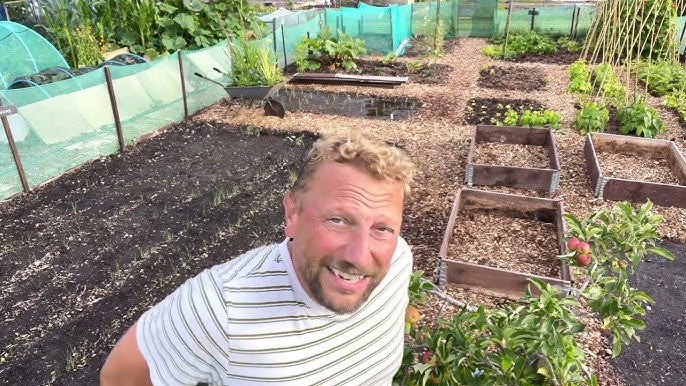
    In a noisy, fast-paced world, there’s something quietly revolutionary about tending a piece of earth. For me my allotment has become more than just a garden. It’s a place of peace, purpose, and unexpected joy.


    As a long-time resident of Northumberland and someone with a background in teaching, I initially sought out an allotment as a simple hobby — a way to unwind after years of classroom life. But what I found was so much more: a new way of experiencing time, nature, and community.


    🌤️ The Seasons Speak Louder Than Clocks

    On the allotment, you start to live by the seasons. Spring means sowing — little green shoots of hope. Summer is a blur of colour, growth, and daily visits to water and weed. Autumn brings reward: homegrown potatoes, tomatoes, and beans that taste better than anything from a shop. Even winter has its quiet purpose, offering rest and reflection.


    🥕 Growing Your Own Food in Hexham: Pure Satisfaction

    There’s something special about biting into a tomato still warm from the sun — especially when you’ve grown it yourself. Allotment produce in the North East thrives surprisingly well, and Hexham’s climate has its own gardening rhythm. From courgettes to kale, every crop becomes a small triumph. As a teacher, I used to mark student work — now I measure success by the size of my carrots!


    Gardening as Therapy

    The allotment is where stress goes to die. The simple, repetitive tasks — digging, planting, harvesting — quiet the mind like nothing else. There’s no pressure, no technology, no ticking clock. Just the breeze, the birds, and the scent of fresh soil. For anyone struggling with anxiety or burnout (especially my fellow teachers in Hexham and beyond), I can’t recommend it enough.


    🤝 Community Allotments in Haydon Bridge: More Than Just a Plot

    One of the biggest surprises has been the community. Our allotment site is a network of friendly faces, expert growers, and generous souls. We trade tips, tools, seeds, and stories. I’ve learned more from my neighbours than from any book — and gained a few good friends along the way.


    🌾 Life Lessons From the Soil

    It’s not always smooth. Slugs invade, some crops fail, and the weather isn’t always kind. But even the setbacks teach patience and resilience. When you finally harvest something perfect, it feels like more than food — it feels like growth, inside and out.


    💬 Final Thoughts: A Teacher’s Perspective on Reconnecting with Nature

    Taking on an allotment in Northumberland has given me a new perspective — not just on gardening, but on life. As a teacher, I used to think of growth in academic terms. Now, I see it in green shoots, in quiet mornings, in mud under my fingernails. The joy is real. The peace is lasting. And the food? It’s the best I’ve ever tasted.

    If you’re thinking about getting an allotment — whether you’re in Haydon Bridge or anywhere else — take the leap. You might just grow more than vegetables.


    🧑‍🏫 About the Author
    The author is a long – retired teacher and amateur gardener who writes about wellbeing, nature, and life in Northumberland. Please feel free to leave a comment, share or repost on your social media

    #Haydon Bridge

    #gardening for wellbeing

    #Gardening

    #mental health gardening

    #UK teachers wellbeing

  • Former Northumberland Teacher, Now Enjoying a Life in Music


    A former science teacher from Northumberland, now deeply involved in community music describes his journey from classroom to the community.

    I loved teaching, but I’ve always believed that education should be about inspiration, not just instruction. I have found that people are always willing to discover their creativity, whether they’re teenager or retiree.

    My day ranges from practicing, writing and arranging music to performing with various local ensembles.

    I am a retired teacher and this blog is about a life beyond the classroom. I write regularly about teaching, career change, and personal growth, as well as more wide ranging subjects.

    Creativity isn’t a luxury. It’s how we rebuild ourselves.

    #Haydon Bridge #Northumberland #retirement #teachers ##music

    Peter Drake Former Science Teacher Queen Elizabeth High School, Hexham Retired science teacher and writer from Northumberland, sharing essays on music, education, culture and local life in Hexham.
    Hexham Northumberland UK

  • The Quiet Power of Daily Reading: Why Every Day Spent with a Book is a Day Well Lived

    A former teacher from Northumberland in Britain, spent many years inspiring young minds in classrooms across the UK. Always believing that enthusiasm should reign in the classroom, he built a reputation for encouraging curiosity, creativity, and resilience. Today, he continues to share these values through writing, music, and community projects, proving that learning never really ends — it just finds new forms.

    In a world increasingly shaped by fast information, endless notifications, and digital distraction, the act of sitting down with a book each day may seem almost quaint. But within that quiet, deliberate habit lies an extraordinary kind of wisdom — a daily discipline that nourishes the mind, shapes our understanding of the world, and subtly transforms the soul. Reading every day is not just about acquiring knowledge. It’s a slow, steady reclamation of our time, our focus, and our humanity.

    All is calm in the classroom…

    The Wisdom of Consistency

    Most great things in life are built through small, consistent efforts: health, relationships, creativity, even happiness. Reading is no different. A few pages each day may not seem transformative in the moment, but over time, this gentle habit compounds into a vast inner library of ideas, images, and insights. It’s an act of self-nurture that takes just a sliver of your day but pays back with lifelong dividends.

    There is something inherently wise in committing to a small practice every day — whether it’s reading, walking, writing, or meditation. These acts tether us to something deeper than routine. They remind us that real growth rarely happens in a rush. Wisdom, after all, is not just knowledge — it is knowledge metabolized slowly, made personal through reflection. And books, read one quiet day at a time, offer us that exact kind of reflection.

    Expanding Empathy and Perspective

    Reading daily cultivates something our fractured societies desperately need: empathy. Through novels, memoirs, and essays, we step into lives that are not our own. We experience joy and grief through the eyes of characters from different countries, different centuries, different walks of life. Fiction in particular is a quiet empathy machine. Neuroscience even confirms what readers have long felt — reading literary fiction strengthens our ability to understand other minds.

    And it’s not just fiction. Non-fiction teaches us to see the structures behind society, the mechanics of our own biases, the patterns in history that we may be doomed to repeat if we’re not paying attention. Reading daily isn’t just a personal pastime — it’s a political and moral act. It makes us harder to manipulate. It makes us slower to judge. It makes us more receptive to complexity in a world obsessed with simplicity.

    Deep Reading vs. Doomscrolling

    In the age of the algorithm, we’re conditioned to skim, swipe, and scroll. The average person consumes thousands of words a day but absorbs very little. We read tweets, headlines, emails, and clickbait. But do we really read? Deep reading — the kind that demands attention and offers transformation — is becoming rarer. And yet it’s precisely what we need most.

    Reading a book requires patience, focus, and surrender. It trains our attention span, which is a skill now under siege. It pushes back against the constant fragmentation of our minds. Unlike online content engineered for outrage or virality, books are one of the last forms of media that encourage depth over speed. Reading daily is an antidote to mental clutter — a kind of mental fasting that reclaims our capacity to think clearly.

    Reading as Resistance

    To read daily is to rebel against a culture that often tells us we’re too busy to slow down. In a society that equates productivity with value, taking time each day to read can feel almost subversive. But it’s a resistance worth embracing. You’re declaring that your inner life matters. That your curiosity is worth cultivating. That your attention is yours to direct.

    Books offer a quiet refuge — not from the world, but into it. The best books don’t help us escape reality; they help us understand it more fully. They offer solace, yes, but also challenge. They provoke us to think, to question, to care. And when you read every day, you carry this subtle power with you — an inner world that can’t be easily shaken by noise or trend.

    Reading as Identity Work

    The books we choose to read shape who we become. Each book, in a way, is a conversation — not just between author and reader, but between your current self and your future self. Reading daily is a form of identity work. You’re not just absorbing content; you’re constructing your worldview. You’re learning who you are by exploring what resonates and what doesn’t.

    Ask someone what they’re reading and you’ll learn something important about them. Ask someone why they read and you’ll learn even more. People read to heal, to dream, to understand, to remember. Some read for the sheer joy of language, others for answers to questions they can’t yet articulate. But those who read daily often find that over time, books become companions on the journey of becoming.

    Making Time in a Busy World

    Of course, the number one reason people give for not reading is lack of time. But the truth is, we often have time — we just don’t notice where it goes. Ten minutes on social media, fifteen in a queue, half an hour on YouTube. If you read just 20 pages a day — less than most people realize — you could finish around 30 books a year. That’s hundreds of new ideas, stories, and perspectives in the space between meetings or before bed.

    The key is to make reading part of the rhythm of life. Keep a book by your bed, or in your bag, or in your car. Read on your commute. Read while waiting. Read to begin or end your day with intention. Build a ritual around it — a cup of tea, a cozy chair, a few quiet minutes. Protect that time like you would a meeting with someone important. Because you are meeting someone important: yourself.

    Final Thoughts: A Habit Worth Keeping

    Reading every day won’t solve all your problems. It won’t make the world less chaotic or your life magically easier. But it will give you tools — language, imagination, empathy, insight — that will help you navigate life with more grace and clarity. It will sharpen your mind and soften your heart. It will remind you, day by day, that wisdom is not something you find all at once. It’s something you grow into, one page at a time.

    So read. Not because you have to. Not to impress anyone. Not even to finish a book quickly. Read because every day deserves a few minutes of quiet reflection. Because your inner world matters. Because books are among the oldest, truest forms of human connection we have. And because somewhere, in the pages of a book you haven’t opened yet, there’s a sentence waiting to change your life.


    Tags: #ReadingHabit #DailyWisdom #BookLovers #PersonalGrowth #SlowLiving #AttentionEconomy #MindfulLiving

  • Music, the future and me…

    A former teacher from Northumberland in enjoyed a long career working the UK , in classrooms across the UK. After his time in teaching came to an end, he redirected his passion for learning into writing, music, and community projects. Today, he shares his experiences through articles that explore creativity, resilience, and the joy of new beginnings beyond the classroom.

    Music, the future and me…

    I’m in my sixties, now, and perhaps three quarters of my way through what has been a happy, healthy and fulfilling life. I am lucky, and grateful for that luck, but am aware that luck can run out.

    Several of my friends have elderly parents who suffer from the scourge of modern life: dementia. I am afraid that I might succumb to this dreadful condition. What to do?

    Recently, I read in the Sunday papers that THE way to future proof your mental health AND ward off the horrors of dementia, Alzheimer’s etc. is to take up a musical instrument. The author was quite clear on the matter; the long terms benefits of such an activity really do make the effort worthwhile. The rationale is simple and easy to understand. Playing an instrument, particularly in an ensemble such as an orchestra or band, engages many different parts of the brain, providing stimulation and so slowing down the natural process of decline that comes to us all in time.

    Taking up an instrument later in life can help stave off dementia

    Here’s how. First up is the cerebellum; the part of the brain used to manipulate the instrument (by pressing valves, moving a slide, striking a key). When one of these actions happens, a little part of the brain is activated. Use it or lose it, as they say. The same thing happens with listening to the sound you have made. The auditory cortex has its own software too, so when you listen to the sound you have created, it too, fires up. Reading the music you are playing requires a fuctioning set of eyes, and guess what? Their brain centre (the temporal — occipital cortex) is called into action too. How about memory? Or the need to integrate the movements of the conductors baton with your own movement (of hands, mouth, arms, lips or whatever parts of the body are required to play your chosen instrument). The list of brain centres required to play and instrument is long; longer, perhaps than almost any other activity, such as sport.

    The message is clear. By playing regularly, musicians keep the grey matter stimulated and do much to keep away the horrors faced by so many of our community.

    As a former teacher from Northumberland in Britain, the author enjoyed a long career working in classrooms across the UK. After his time in teaching came to an end, he redirected his passion for learning into writing, music, and community projects. Today, he shares his experiences through articles that explore creativity, resilience, and the joy of new beginnings beyond the classroom.